UK Express Delivery in 1-2 days 

Fine Talc Team | 3 days ago

Talc for Rubber: The Complete Guide to Rubber-Grade Talc

This guide is written for compounders, technical managers and buyers at UK rubber manufacturers. It explains what rubber-grade talc is, what it does inside a compound, where it is used, which specifications to check on a data sheet, and how to choose a supplier you can rely on batch after batch.


Rubber talc is a finely ground, plate-shaped mineral filler that rubber manufacturers use for three jobs at once: as an anti-tack dusting agent, as a processing aid and as a semi-reinforcing filler. Used well, it stops uncured compound sticking together, gives smoother extrusions with cleaner edges, and lowers compound cost without a large drop in physical properties.

What is rubber talc?

Rubber talc is talc, a hydrated magnesium silicate (Mg₃Si₄O₁₀(OH)₂), that has been milled and classified to a particle size and purity suited to rubber processing. In the tyre and inner-tube trade it is still often called French chalk.

Three properties make talc unusually well suited to rubber:


A platy structure.

Talc particles are thin, stacked plates. During mixing, extrusion and calendering these plates line up with the flow, which lubricates the compound and creates a layered barrier inside it.


A soft, non-abrasive surface.

At 1 on the Mohs scale, talc is the softest mineral. It is gentle on mixers, extruder screws and dies, which reduces wear compared with harder fillers.


An organophilic, water-repellent surface.

Talc wets readily into non-polar polymers such as natural rubber, SBR, EPDM and butyl, and it does not pick up much moisture. It is also chemically inert, so it does not interfere with most cure systems.

That combination is why a single grade of talc can sit on the outside of a rubber slab as a dusting powder and inside the compound as a filler.

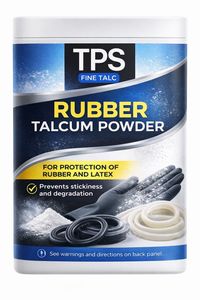
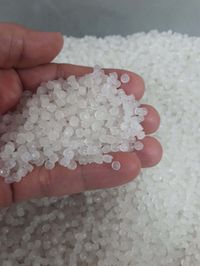
What does talc do in rubber?


Talc does five useful jobs in rubber manufacturing: it prevents sticking, eases processing, extends and partly reinforces the compound, improves barrier properties and helps parts release from moulds.


1. Anti-tack and dusting agent


Uncured rubber is tacky. Slabs, strips, pellets and preforms stacked or coiled without protection will fuse together in storage, a problem known as blocking. A light coat of talc acts as a partitioning layer that keeps surfaces apart until the next process step.


Talc can be applied dry by dusting or tumbling, or as a slurry in a dip tank after the mill or batch-off line. It is also used to dust inner tubes, curing bladders and the inside of hoses so that surfaces do not stick together during curing and handling.


2. Processing aid for extrusion and calendering


Because its plates align with the flow, talc lowers internal friction in the compound. Compounders typically see smoother extrudate surfaces, sharper profile edges, less die swell and less "nerve" (elastic recovery) during calendering. That can mean faster line speeds and fewer rejects on extruded seals, profiles and hoses.


3. Semi-reinforcing and extending filler


In light-coloured and non-black compounds, talc is used to replace part of the clay, whiting (calcium carbonate) or precipitated silica. It raises hardness and modulus and gives better tensile and tear strength than a non-reinforcing filler such as whiting, at a lower cost than silica. Surface-treated (for example, silane-treated) talcs push reinforcement further.


4. Barrier and electrical properties


Aligned talc plates create a longer, winding path for gases and moisture to travel through, which lowers permeability. This is useful in butyl and halobutyl compounds and in sealing applications. Talc is also a good electrical insulator, which is why it appears in cable insulation and sheathing compounds.


5. Mould release


A thin film of talc on moulds, mandrels or preforms helps cured parts release cleanly, reducing tearing and surface defects on demoulding.


Where is rubber talc used?


Rubber talc is used wherever uncured compound needs to be handled without sticking, or where a light-coloured compound needs a low-cost filler that also helps processing. The most common applications are below.


Tyres and inner tubes. Talc, often called French chalk in this trade, is dusted onto inner tubes and curing bladders so surfaces do not stick together. It also helps cured parts release cleanly.


Hoses. Talc is dusted inside the bore to stop it sticking during curing and handling. It is also used as a filler in the cover compound to smooth extrusion.


Extruded profiles and seals. In EPDM weatherstrip and similar profiles, talc works as a filler and processing aid. It gives smoother surfaces, sharper edges and less die swell.


Gaskets, O-rings and moulded technical parts. Talc dusts preforms so they do not stick before moulding, aids clean mould release and acts as a filler in the compound.


Cable insulation and sheathing. As a filler in EPDM and other cable compounds, talc adds electrical insulation and helps the compound extrude smoothly.


Footwear soles. Talc lowers compound cost and helps control hardness. It is also used to dust sheets so they do not stick together.


Roofing membranes and sheeting. In EPDM and butyl sheet, talc lowers permeability to gases and moisture and improves dimensional stability.


Conveyor belts and flooring. Talc is dusted between plies to prevent sticking and used as a filler to reduce cost.


In practice many manufacturers use talc in two places at once: inside the compound as a filler, and on the surface of the same compound as a dusting agent.


How to choose a rubber talc: the specifications that matter


Not all talc behaves the same in rubber. Particle size, purity and trace metals decide whether a grade gives you a smooth extrusion and stable ageing, or surface defects and early cracking. Check these points on any technical data sheet before you trial a grade.


Median particle size (d50). Choose a finer grade for reinforcement and a coarser grade for dusting. Finer talc reinforces better, while coarser talc flows and spreads more easily as a dusting powder.


Top cut (d98). Look for a tight, consistent upper limit. Oversized particles cause surface pits, die lines and weak points in thin sections.


Talc content and mineralogy. Look for a high, consistent talc content with known levels of chlorite, dolomite or magnesite. These accessory minerals change reinforcement, colour and acid resistance.


Copper and manganese. Look for very low levels. Both metals catalyse oxidation and accelerate ageing, especially in natural rubber.


Moisture. Look for low moisture, typically below 0.5%. Moisture can cause porosity and blistering during cure.


Brightness and whiteness. Look for high brightness where colour matters, such as in white and pastel compounds.


Asbestos. The grade must be certified asbestos-free, with test reports. This is a safety and legal requirement, covered in more detail below.


Batch consistency. Ask for a certificate of analysis with every batch. Your compound is only as consistent as your raw materials.


As a rule of thumb, buy the finest, cleanest grade your process needs, not the finest grade available. A very fine talc costs more and can raise compound viscosity, so the right choice depends on whether talc is mainly a filler, a processing aid or a dusting agent in your process.


Talc vs other rubber fillers


Talc sits between low-cost, non-reinforcing whiting and high-performance, high-cost silica. Its unique advantage is the processing benefit that comes from its platy shape.


Talc is semi-reinforcing and excellent for processing, giving smooth surfaces and low die swell. It is low to moderate in cost and white, and best suited to light-coloured profiles, seals, cables and anti-tack use.


Calcium carbonate (whiting) gives little reinforcement but processes well. It is low in cost and white, and best suited to high-loading, low-cost compounds.


Kaolin clay is semi-reinforcing and processes well. It is low to moderate in cost and off-white, and suits general light-coloured goods.


Precipitated silica is highly reinforcing but can raise viscosity and usually needs coupling agents. It is high in cost and white, and suits high-performance, tear-resistant compounds.


Carbon black is highly reinforcing and processes well. It is moderate in cost but can only be used in black compounds, so it dominates tyres and most black technical goods.


Talc is rarely an all-or-nothing choice. Many compounders blend it with whiting, clay or silica to balance cost, processing and physical properties.


Safety, handling and compliance


Rubber talc is safe to use when it is certified asbestos-free and airborne dust is kept under control. Those two points should be non-negotiable in any purchasing decision.


Asbestos-free certification. Some talc deposits can occur alongside asbestos minerals, so every grade you buy should come with test evidence that it is asbestos-free. Ask your supplier which methods were used (for example X-ray diffraction combined with microscopy) and how often batches are tested.


Dust exposure. In Great Britain, HSE’s EH40 workplace exposure limits set a limit for respirable talc dust. Your COSHH assessment should cover dusting stations, bag tipping and mixer charging. Local exhaust ventilation, enclosed or automated dusting equipment, and slurry or dip application all cut airborne dust compared with open hand dusting.


Documentation. A reliable supplier will provide a current safety data sheet, a technical data sheet and a certificate of analysis for each batch, so your quality team can trace every delivery.


Storage. Keep talc sealed, dry and off the floor. Damp talc cakes, disperses poorly and can introduce moisture into the compound.


Choosing a rubber talc supplier in the UK

The best rubber talc supplier is the one that gives you the same material every time, the paperwork to prove it and a person who answers when you call. Before switching or adding a supplier, check:


Consistency:

 a certificate of analysis with every batch, and stable particle size between deliveries.


Documentation:

 a current SDS, a technical data sheet and asbestos-free test evidence, ready before your first order.


Samples:

Enough material to run a proper lab and line trial.


Order flexibility:

 pack sizes and order quantities that fit your production, not a multinational’s minimums.


Responsiveness:

 quick answers on lead times, specifications and technical questions.


Rubber talc from Fine Talc


Fine Talc is a UK talc supplier working with rubber manufacturers and compounders who want a dependable alternative to the largest mineral suppliers. We supply rubber-grade talc for dusting, anti-tack and compounding, with full documentation, and we are built to be flexible and responsive for small and mid-sized manufacturers.


If you are reviewing your filler or dusting agent, or want a second source for an existing grade, request a sample or a technical data sheet from Fine Talc. Tell us your compound type and how you use talc today, and we will suggest a grade to trial.


Rubber talc FAQs


What is rubber talc used for?


Rubber talc is used as an anti-tack dusting agent for uncured rubber, as a processing aid that smooths extrusion and calendering, and as a semi-reinforcing filler in light-coloured compounds. It is also used as a mould release agent and to lubricate inner tubes and curing bladders.


Is talc a reinforcing filler in rubber?


Talc is a semi-reinforcing filler. It improves hardness, modulus and tear strength more than calcium carbonate, but it does not reinforce as strongly as carbon black or precipitated silica. Surface-treated talcs give higher reinforcement than untreated grades.


What is French chalk in the rubber industry?


French chalk is a traditional trade name for talc used as a dusting powder in the rubber industry, especially for tyres, inner tubes and curing bladders. It stops rubber surfaces sticking together during storage, handling and vulcanisation.


What is the difference between rubber talc and cosmetic talc?


Both are talc, but they are processed and specified for different uses. Rubber talc is chosen for particle size, low copper and manganese, and processing performance. Cosmetic talc is specified against cosmetic purity, microbiological and regulatory standards. Both must be asbestos-free.


How much talc is used in a rubber compound?


There is no single figure. Loadings depend on whether talc is the main filler or a partial replacement for clay, whiting or silica, and on the hardness and properties required. Most compounders find the right level through lab mixes and line trials.


Can talc replace calcium carbonate in rubber?


Talc can replace some or all of the calcium carbonate in many light-coloured compounds. It usually improves extrusion smoothness, hardness and tear strength, though the cost per kilo is higher. Many compounders use a blend of both.


Is rubber talc asbestos-free?


Rubber talc should always be certified asbestos-free by its supplier, with test reports available on request. Ask which test methods were used and how often each batch is tested before you buy.


How should rubber talc be stored?


Store rubber talc in sealed bags in a dry, covered area, off the floor and away from moisture. Damp talc cakes, spreads unevenly as a dusting agent and can introduce moisture into the compound.

Fine Talc Team