UK Express Delivery in 1-2 days 

Fine Talc Team | 20 hours ago

Talcum Powder Buyer's Guide: Grades, Uses and Safety

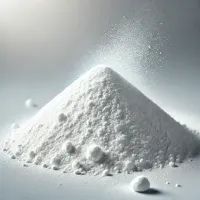
Talcum powder is one of the most versatile everyday minerals. The same soft white powder sits in bathroom cabinets, make-up bags, gym bags, food factories and rubber plants.


This guide covers what talcum powder actually is, the different grades, what each one is used for, what the latest science says about safety, and how to buy genuinely asbestos-free talcum powder.


At Fine Talc, we supply A+ grade, asbestos-free talc to UK households and businesses, from 100g packs to 25kg trade bags. Everything below is written to help you choose the right product, whether or not you buy it from us.


What Is Talcum Powder?

Talcum powder is finely milled talc, a natural mineral made of hydrated magnesium silicate (chemical formula Mg₃Si₄O₁₀(OH)₂, CAS No. 14807-96-6). It is the softest mineral on Earth, sitting at 1 on the Mohs hardness scale.

That softness, plus a plate-like (lamellar) particle shape, gives talc the properties people value:


Absorbs moisture and oil, which is why it keeps skin dry and makes make-up matte.


Reduces friction, so skin, rubber and powders slide rather than stick.


Chemically stable and heat resistant, so it doesn't react with most ingredients.


Naturally bright white when the ore is high purity.


Talc vs talcum powder vs French chalk


The terms overlap. Talc is the mineral; talcum powder is the milled powder; French chalk is the traditional name tailors and crafters use for the same material (see our Pure Natural French Chalk Talc). Some products sold as "talc-free" body powder are actually cornflour. That's a different material with different properties, explained in our talc vs corn flour comparison.

For a deeper look at the mineral itself, read What is Talc?


What Is Talcum Powder Used For?


Talcum powder is used far beyond the bathroom. The main uses fall into five groups.

Personal care and body powder


The classic use: a light dusting on feet, underarms and skin folds to absorb sweat and reduce chafing. Many people prefer an unscented talcum powder or an unperfumed body powder because fragrance is a common skin irritant. Our guide to everyday talcum powder uses has more ideas.


Cosmetics and make-up


Talc gives pressed powders, foundations, blushers and eyeshadows their silky slip and matte finish. Formulators use cosmetic-grade talc for make-up and formulations; see how talc mattifies make-up for the science.


Sport, gym and climbing


Athletes, climbers, gymnasts and snooker players use talc for a dry grip and to stop kit rubbing. See our sports talcand athlete's guide to talcum powder.


Food and pharmaceuticals


As food additive E553b, talc works as an anti-caking, coating and release agent, for example in keeping spices free-flowing. In medicines it's a glidant and lubricant that helps tablet powders flow; read why talc is used in pharmaceutical formulations.


Industry: rubber, plastics, paint and paper

Industry is where talc does its heaviest lifting. Rubber manufacturers use it as an anti-tack dusting agent and filler (rubber talc guide). Plastics compounders add it to polypropylene for stiffness and heat resistance (talc in polypropylene). Paint makers use it as an extender, and paper mills as a filler and pitch-control agent.


Talcum Powder Grades: Which One Do You Need?


Not all talcum powder is the same. Grade is decided by purity, whiteness, particle size and the testing behind each batch. Match the grade to the job:


Cosmetic grade talcum powder


Cosmetic grade is used for body powder, make-up, waxing, hair and skincare. Look for an asbestos-free test report, a fine particle size and, if your skin is sensitive, no added fragrance. Our Unscented Talcum Powder fits this grade.


Pharmaceutical grade talc


Pharmaceutical grade is used as a tablet glidant, lubricant and excipient. Check that it meets the pharmacopoeia monograph your formulation requires and comes with a certificate of analysis for every batch. See our Talcum Powder Fine Pure A+.


Food grade talc (E553b)


Food grade talc is used as an anti-caking, coating and release agent. Check for food-grade certification, the E553b specification and stated contaminant limits. See our Talc 98% E553b Food Grade.


Fine 400 mesh talc


Fine 400 mesh talc is used in cosmetics, waxing powder, plastics and paint. Check the particle size (400 mesh is roughly 37 microns) and the purity. See our Talcum Powder Fine 400 Mesh.


Industrial and rubber talc


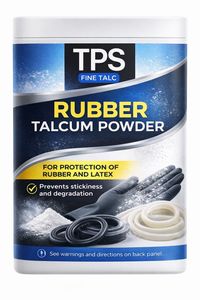
Industrial talc is used as an anti-tack dusting agent, for rubber and latex care, and as a filler. Check for consistency between batches and bulk pack sizes. See our Rubber Talc Powder.


Bulk trade talc


Bulk talc suits formulators, salons and manufacturers. Compare price per kg, lead times and the batch documents supplied. See our 25kg Bag Talcum Powder A+.

If you're unsure, start with our guide to talc grades or the more technical how to choose the right talcum powder grade.


Is Talcum Powder Safe?


The honest answer: it depends on what's in the powder and how you use it. Here is what the evidence says, so you can decide for yourself.


Asbestos is the main concern


Talc and asbestos can form in the same rock, so poorly sourced or poorly tested talc can be contaminated. Talc that contains asbestos is classed with asbestos itself as a known human carcinogen. That's why the single most important thing to check is a credible asbestos-free test report, not just an "asbestos-free" label.


What changed in 2024


In July 2024 the World Health Organization's cancer agency, IARC, classified talc as "probably carcinogenic to humans" (Group 2A). The panel based this on "limited" evidence in humans (mainly studies of ovarian cancer and body powder used in the genital area), alongside animal and laboratory evidence. The same review noted that asbestos contamination couldn't be ruled out in many of the human studies.

Group 2A is a statement about the strength of evidence, not the size of the risk. Cancer Research UK has said more and better-quality research is needed to confirm whether uncontaminated talc causes cancer. The American Cancer Society reports no increased lung cancer risk from cosmetic talcum powder use.


How to use talcum powder sensibly


Avoid the genital area.

That's where most of the research concern sits.


Don't inhale it.

Shake powder into your hand, away from your face, rather than straight onto skin.


Choose fragrance-free

 if you have sensitive skin.


Buy from a supplier who will show you the paperwork

 (see the checklist below).

If you have a specific health concern, speak to your GP or pharmacist.


How to Buy Talcum Powder: A 6-Point Checklist


Whether you need 100g for the gym bag or a pallet for production, run through these checks before you buy talcum powder:


Asbestos-free evidence.

 Ask for a recent test report from an independent lab, not just a label claim.


The right grade.

 Cosmetic, pharmaceutical and food grades have different purity and documentation requirements. Industrial talc isn't meant for skin or food.


Purity and particle size.

 Higher purity means fewer impurities; finer mesh means a smoother, silkier powder.


Fragrance and additives.

 For sensitive skin, choose a pure, unscented talc with nothing added.


Batch documents.

 Business buyers should expect a certificate of analysis and a safety data sheet (SDS) for every batch.


A supplier you can reach.

 A supplier close to you means faster delivery, easier returns and someone to talk to if a batch isn't right.


Why buyers choose Fine Talc


Asbestos-free, A+ grade talc with 97–99% purity depending on batch.


Cosmetic, pharmaceutical, food (E553b), sports and industrial grades from one supplier.


Pack sizes from 100g to 25kg, so households and manufacturers are both covered.


Packed and dispatched in London , with UK express delivery in 1–2 days.


Food-grade certification (ISO 22000:2018) available on our  E553b product page


Browse the full range on our products page, or read The Best Talc in the UK for a deeper comparison.


Talcum Powder FAQs


Is talcum powder the same as baby powder?


Not always. Traditional baby powder was made from talc, but many baby powders sold today use cornflour (cornstarch) instead. Check the ingredients list: talc-based powders list "talc".


Is talcum powder banned?


No. Talcum powder is legal to sell in the UK as a cosmetic, a food additive (E553b) and an industrial mineral. Products containing asbestos are banned, which is why asbestos-free testing matters.

Is talcum powder safe to use?


Asbestos-free talc used sensibly on the body is widely sold. In 2024 IARC classed talc as "probably carcinogenic" based on limited human evidence, mainly linked to genital use. Avoid that area, avoid inhaling the powder and buy tested, asbestos-free talc.


What is talcum powder used for?


Talcum powder absorbs moisture and reduces friction. It is used as body and foot powder, in make-up, for sports grip, as an anti-caking food additive, as a tablet glidant in medicines, and as a filler in rubber, plastics, paint and paper.


Can I use talcum powder on babies?


UK rules require talc powders for under-3s to warn users to keep the powder away from the child's nose and mouth. If you use it, apply it to your hand first, away from the baby's face, and never on the nappy area.


What is the difference between cosmetic and industrial talc?


Cosmetic talc is higher purity, finer and tested for skin use. Industrial talc is made for manufacturing, such as rubber and plastics, and isn't intended for skin or food.


Where can I buy asbestos-free talcum powder?


You can buy asbestos-free talcum powder online from Fine Talc, a UK supplier offering cosmetic, pharmaceutical, food, sports and industrial grades with UK express delivery in 1–2 days.


Find the Right Talcum Powder for You


Talcum powder is one of the most useful minerals around, from keeping feet dry to helping a rubber line run smoothly. The right choice comes down to three things: the correct grade, proof that it's asbestos-free, and a supplier who can back it up.


For personal use: start with our Unscented Talcum Powder.


For cosmetic formulations: try our cosmetic-grade talc.


For trade and bulk order: see our  25kg bags or contact our teamfor a quote and batch documents.


Fine Talc Ltd is a UK talc supplier based in London (Companies House no. 16437539).


Fine Talc Team